
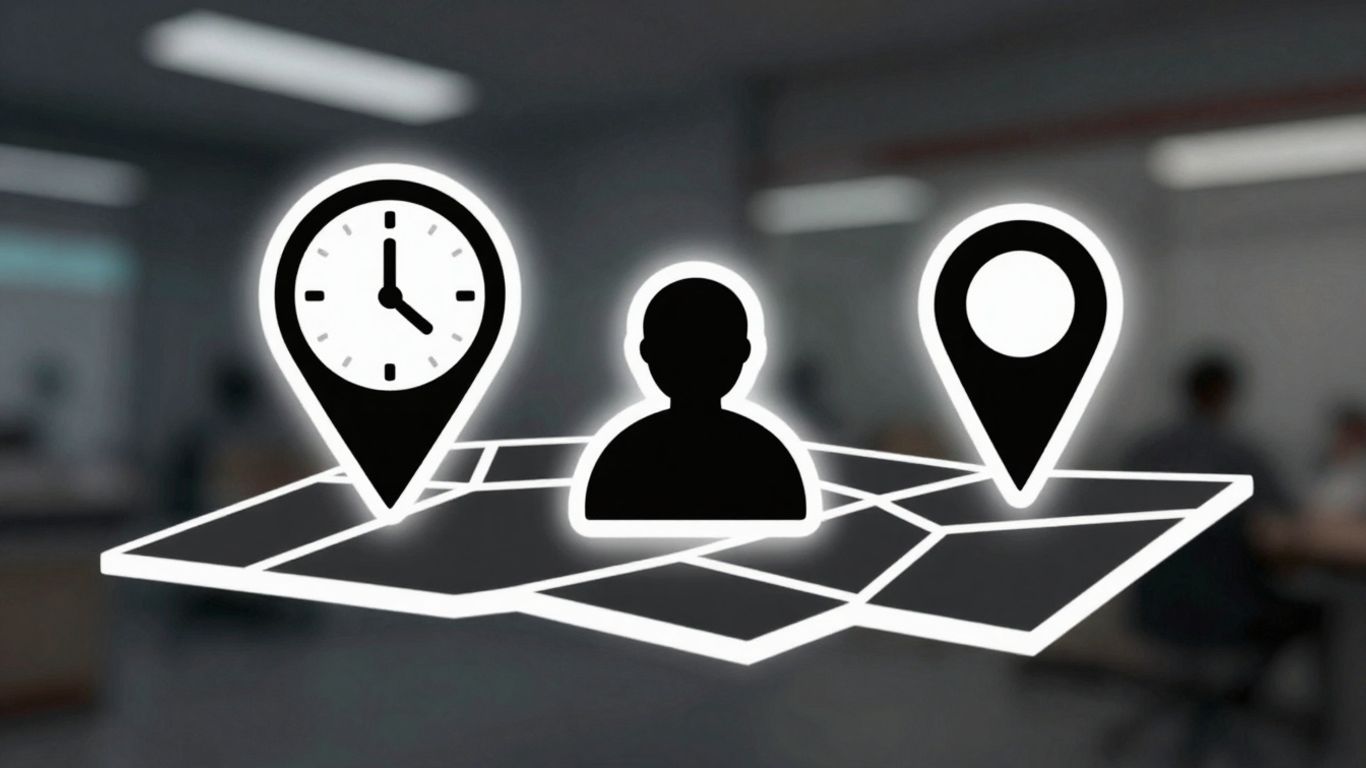
Trigger mapping means tracking where, when and with whom your unhelpful eating or habit slips tend to happen, so you can plan for those exact situations instead of relying on willpower. You “geotag” the places, “clocktag” the times and “people-tag” the social settings. After a week or two, patterns usually stand out clearly, and each pattern becomes a spot where a small plan can make a big difference.
Here’s a simple toolkit you can use with a notebook or your phone’s notes app.
Why context matters
Many eating habits are tied less to hunger and more to cues around us: the couch at 9 p.m., the office break room, a certain friend who always suggests takeout. When you know your cues, you can change them or prepare for them.
Mayo Clinic’s advice on emotional eating starts with a food diary that records what, how much and when you eat, along with how you’re feeling and how hungry you are. Trigger mapping builds on that by adding the place and the people.
The three tags
| Tag | What you record | Examples |
|---|---|---|
| Geotag | Where you were | Couch, car, kitchen counter, desk, drive-through, grandparents’ house |
| Clocktag | Time of day and day of week | 3 p.m. weekdays, after 9 p.m., Friday night, Sunday afternoon |
| People-tag | Who was there (or that you were alone) | Alone, partner, kids, coworkers, a specific friend, extended family |
Add two quick notes to each entry: hunger level (1–10) and main feeling (bored, stressed, tired, lonely, happy, celebrating).
Step 1: Log for 7 to 14 days
Each time you notice a strong urge, or eat more than you planned, or skip a habit you intended to do, make a quick entry. Keep it short:
Tues · 9:20 p.m. · couch · alone · hunger 3 · tired/bored · ate chips from the bag while watching TV
Don’t judge entries. You’re collecting information, not grading yourself. If you forget, log it later in the day. Rough data is still useful.
Step 2: Look for clusters
At the end of the week, read through your log and look for repeats. Questions to ask:
- Geotag: Which two or three places show up most?
- Clocktag: Is there a time window that keeps appearing? A particular day?
- People-tag: Do slips happen more when you’re alone, or with certain people?
- Overlap: Do two or three tags line up? (For example, “couch + after 9 p.m. + alone” is a strong combination.)
- Hunger: Were you actually hungry, or mostly not?
The overlaps are your highest-risk contexts. Pick the top one or two to work on first.
What a finished map might show
Here’s how a week of entries might boil down, as an illustration:
- Places: couch (5 entries), car (3), office kitchen (2)
- Times: 9–10 p.m. (5), 5–6 p.m. (3), mid-afternoon (2)
- People: alone (6), coworkers (2), partner (2)
- Hunger: mostly 4–6, so usually not very hungry
- Feelings: tired and bored in the evening; rushed and hungry on the drive home
Two clear hot spots stand out: “couch, late evening, alone, tired” and “car, after work, hungry.” Those are the places to start, and each one points to a different fix: a new evening routine for the first, a packed snack for the second.

Step 3: Write an if-then plan for each hot spot
An if-then plan links a specific situation to a specific response. In a review of 23 studies, this kind of planning helped people act on healthy eating intentions. It worked best for adding healthy foods, and somewhat less strongly for cutting back on less helpful ones, so it’s worth including both kinds of plans.
| Hot spot | If-then plan |
|---|---|
| Couch + after 9 p.m. + alone | If I sit down to watch TV after 9, then I’ll make a cup of herbal tea first and keep snacks in the kitchen. |
| Car + 5:30 p.m. + after work | If I’m driving home hungry, then I’ll eat the snack I packed before I pass the drive-through. |
| Desk + 3 p.m. + stressed | If I feel the 3 p.m. slump, then I’ll walk to refill my water bottle and eat my planned fruit and nuts. |
| Grandparents’ house + Sunday + family | If I’m offered seconds, then I’ll say, “That was delicious, I’m full,” and ask about the recipe. |
| Kitchen counter + after school + kids | If I’m making the kids’ snack, then I’ll sit down and eat my own plated snack with them. |
Step 4: Change the context where you can
Sometimes the easiest fix is to change the setting itself. Mayo Clinic suggests keeping hard-to-resist comfort foods out of the house and putting off grocery shopping when you’re upset. Other context changes:
- Place: Move tempting foods to a high shelf or opaque container. Keep fruit and cut vegetables at eye level.
- Time: Add a planned snack before your risky window so you’re not arriving at it very hungry.
- People: Suggest a walk instead of meeting for food. Let a supportive friend or family member know what you’re working on.
- Routine: Create a new “closing the kitchen” ritual after dinner, like brushing your teeth early.
Step 5: Review and update monthly
Patterns shift with seasons, work schedules and life events. Once a month, log for a few days again and check:
- Are my old hot spots calmer?
- Have new ones appeared?
- Which if-then plans am I actually using?
- Which need a simpler or more realistic response?
Tips for making the map useful
- Keep it fast. If logging takes more than 30 seconds, simplify it.
- Use your phone. A notes app with a template saves time. Some people use the photo timestamp and location as a quick log.
- Log good moments too. Noting when things go well shows you which contexts support you.
- Be curious, not critical. The aim is to learn your patterns, not to collect evidence against yourself.
When to check with a professional
If your log shows frequent episodes of eating large amounts while feeling out of control, or if tracking makes you anxious or obsessive about food, stop and talk with your doctor or a mental health professional. Mayo Clinic notes that therapy can help with emotional eating and can check whether an eating disorder is involved. In Canada, NEDIC offers information and support.
For more on cues and patterns, see emotional eating triggers, environmental cues and the trigger-to-tool map.
Quick takeaways
- Log place, time, people, hunger and feeling for 7 to 14 days.
- Look for overlaps; they’re your highest-risk contexts.
- Write one if-then plan for each of your top hot spots.
- Change the setting where you can: food placement, snack timing, who you meet and where.
- Review monthly and keep logging quick and judgment-free.
FAQ
Do I need an app for this?
No. A small notebook or a phone note works well. Use whatever you’ll actually keep up for two weeks.
What if my biggest trigger is a person I can’t avoid?
Focus on the place and time instead, and prepare a short script. You can also eat a balanced meal beforehand so you’re not very hungry going in.
How many hot spots should I work on at once?
One or two. When those feel easier, move to the next.