
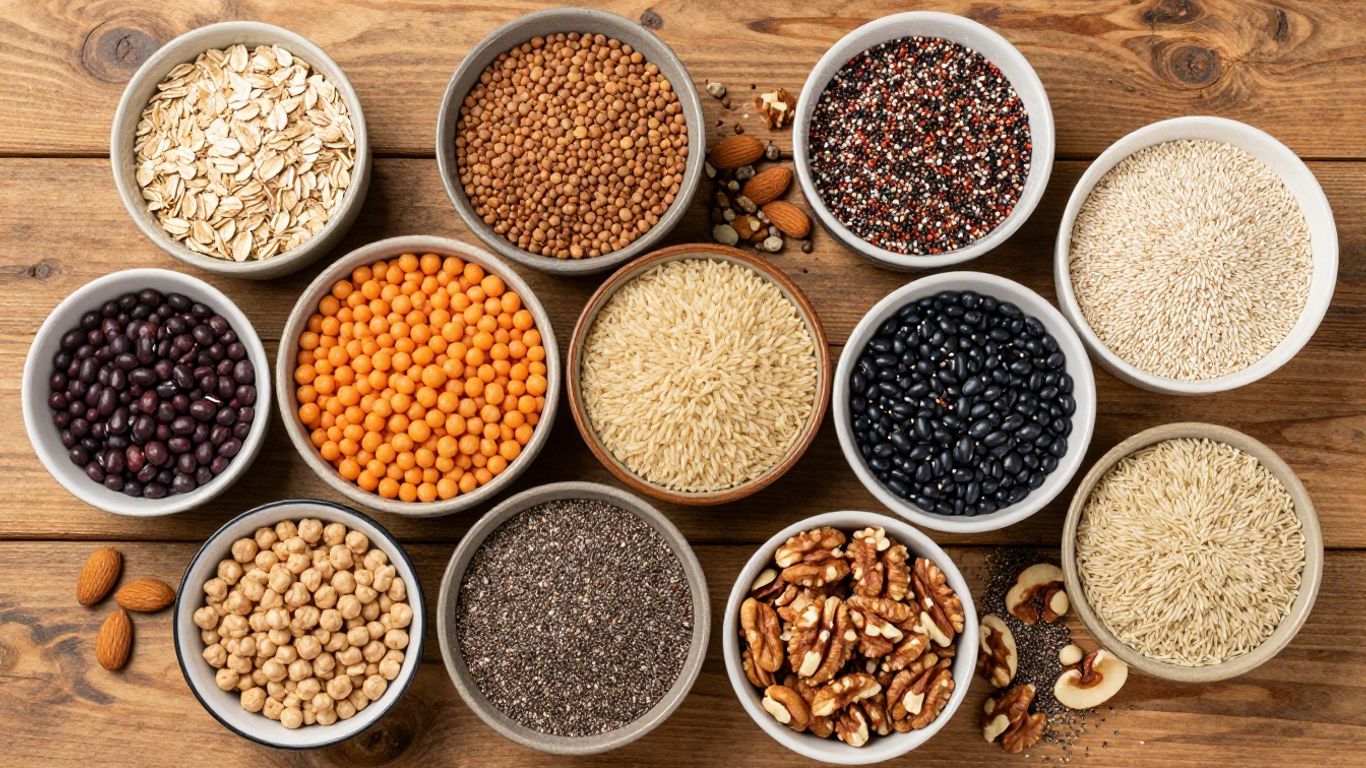
Hey there! So, you’re looking to up your protein game as a vegetarian, but maybe you’re tired of just tofu and beans all the time? I get it. There’s a whole world of delicious plant-based protein out there that doesn’t involve soy overload. We’re talking about pulses, grains, nuts, and seeds – basically, all the good stuff nature provides. This article is all about showing you how to get plenty of protein for vegetarians without feeling like you’re eating the same thing day in and day out. Let’s explore some awesome alternatives!
Key Takeaways
- Pulses like lentils and beans are protein powerhouses, offering plenty of nutrients and versatility for meals.
- Whole grains such as quinoa, farro, and millet contribute to your daily protein intake and add variety.
- Nuts and seeds, including chia, hemp, and almonds, are small but mighty sources of protein and healthy fats.
- Don’t forget about seitan and nutritional yeast for unique, high-protein vegetarian options beyond soy.
- Combining different plant-based foods throughout the day helps ensure you get all the essential amino acids your body needs.
Exploring the Power of Pulses for Vegetarian Protein
When you’re looking to boost your protein intake without relying on soy, pulses are a fantastic place to start. These humble legumes, which include lentils, chickpeas, and beans, are nutritional powerhouses that offer a wealth of benefits beyond just protein. They’re also packed with fiber, vitamins, and minerals, making them a cornerstone of a healthy vegetarian diet.
Lentils: A Nutrient-Dense Powerhouse
Lentils are incredibly versatile and easy to cook, making them a go-to for many vegetarian meals. They come in various types, like red, green, brown, and black, each with a slightly different texture and cooking time. A single cup of cooked lentils can provide around 18 grams of protein, along with a good dose of iron and folate. They’re great in soups, stews, salads, or even as a base for veggie burgers.
Chickpeas: Versatile and Satisfying
Chickpeas, also known as garbanzo beans, are another legume that deserves a spot in your pantry. They offer about 15 grams of protein per cooked cup and are wonderfully adaptable. You can roast them for a crunchy snack, mash them into hummus, add them to curries, or toss them into salads. Their slightly nutty flavor and satisfying texture make them a crowd-pleaser.
Beans: Essential for Meal Prep and Variety
Beans, such as black beans, kidney beans, pinto beans, and cannellini beans, are staples for a reason. They are protein-rich, with amounts varying by type but generally offering around 15 grams per cooked cup. Beans are also incredibly budget-friendly and perfect for meal prepping. Whether you’re making chili, tacos, or a hearty salad, beans add substance and protein that keeps you feeling full and satisfied. Their fiber content also aids digestion and helps regulate blood sugar levels.
Here’s a quick look at the protein content of common pulses:
| Pulse | Protein per Cooked Cup (approx.) |
|---|---|
| Lentils | 18 grams |
| Chickpeas | 15 grams |
| Black Beans | 15 grams |
| Kidney Beans | 15 grams |
Incorporating a variety of pulses into your weekly meals is a smart strategy for consistent protein intake and a diverse nutrient profile. They are affordable, widely available, and can be prepared in countless delicious ways.
Harnessing Whole Grains for Protein
Quinoa: The Complete Grain
When we talk about plant-based protein, quinoa often pops up, and for good reason. It’s one of those rare plant foods that gives you all nine essential amino acids your body needs, making it a complete protein. This is pretty cool because most plant proteins don’t offer the full package on their own. A cup of cooked quinoa packs about 8 grams of protein, plus a good dose of fiber and other nutrients. It’s super versatile too. You can use it as a base for salads, a side dish instead of rice, or even in breakfast bowls. It has a slightly nutty flavor and a nice texture that works well in lots of different meals.
Exploring Farro, Millet, and Amaranth
Beyond quinoa, there’s a whole world of other grains that contribute protein to your diet. Farro, an ancient wheat grain, offers a chewy texture and about 10-11 grams of protein per cooked cup, along with fiber and minerals like iron and magnesium. Millet, a small, round grain, is another good option, providing around 6 grams of protein per cup and a mild, slightly sweet taste. It’s great in porridges or as a side. Amaranth, though technically a seed, is often cooked and used like a grain. It’s a protein powerhouse, offering about 9 grams per cooked cup, and it’s also rich in iron and calcium. These grains might not be complete proteins on their own like quinoa, but they add a significant protein boost and a variety of textures and flavors to your meals. Mixing them into your diet is a simple way to increase your overall protein intake without relying on just one source.
Here’s a quick look at their protein content:
| Grain | Protein per Cooked Cup (approx.) |
|---|---|
| Quinoa | 8 grams |
| Farro | 10-11 grams |
| Millet | 6 grams |
| Amaranth | 9 grams |
Incorporating a variety of whole grains into your meals is a smart strategy. They not only provide protein but also fiber, vitamins, and minerals that support overall health. Think of them as building blocks for satisfying and nutritious vegetarian dishes.
Nuts and Seeds: Tiny Titans of Protein
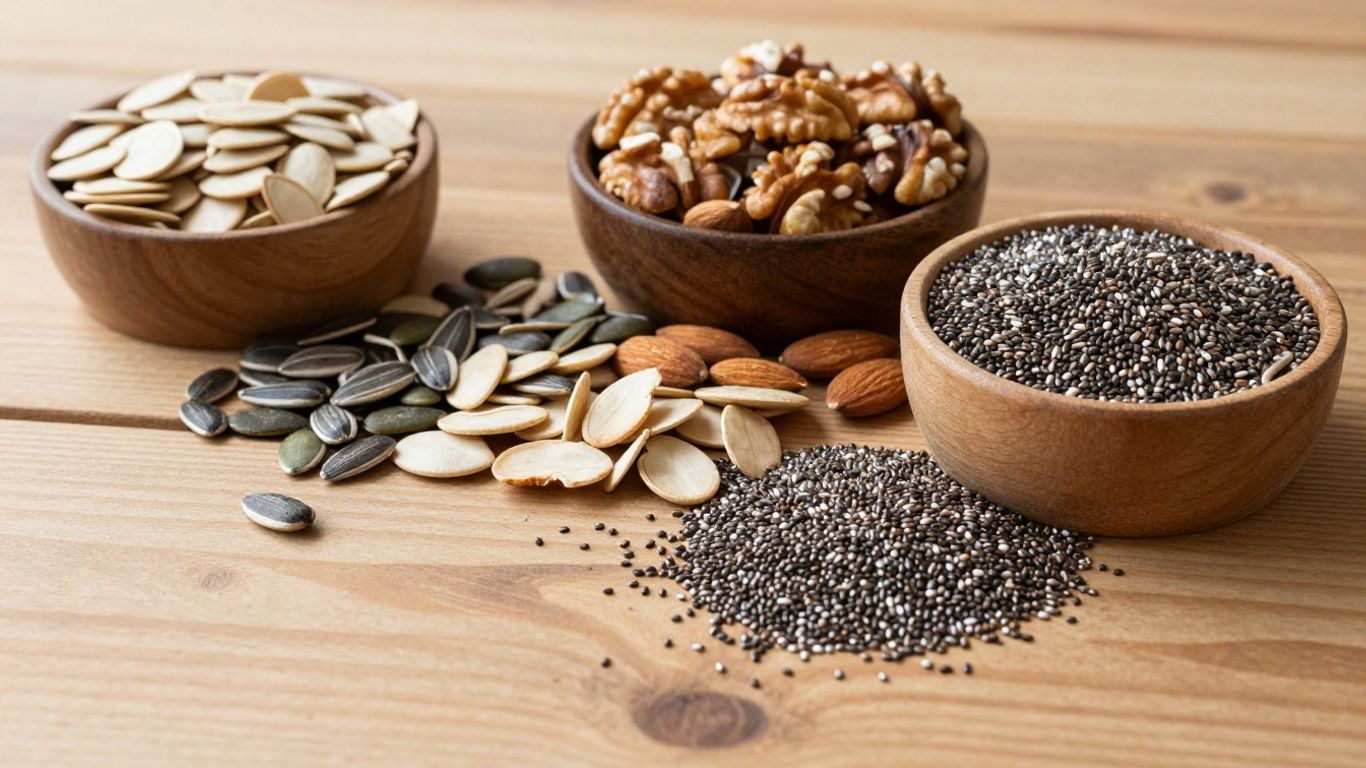
Nuts and seeds are often the unsung heroes of a vegetarian protein diet. These foods may be small, but they deliver a solid punch of protein along with healthy fats, minerals, and fiber. Nuts and seeds fit easily into snacks, meals, and even desserts — making it easy to bump up your daily protein, even if you’re avoiding soy.
Chia Seeds: Omega-3s and Fiber Boost
Chia seeds have a subtle crunch and are packed with nutrients. Two tablespoons contain about 4-5 grams of protein, making them a simple option for boosting smoothies, oatmeal, or overnight puddings. Chia seeds also bring a hefty amount of omega-3 fatty acids, fiber, and minerals like calcium and magnesium. These seeds absorb liquid, creating a gel-like texture that’s handy in recipes, and they keep you satisfied longer.
- Stir them into plant-based yogurt or oatmeal
- Add to smoothies for extra thickness
- Use in homemade energy bars or muffins
If you’re looking for a seed that checks boxes for protein, healthy fat, and a little extra fullness, chia seeds are worth keeping on hand.
Hemp Seeds: A Complete Amino Acid Profile
Hemp seeds stand out because they’re a complete protein, containing all nine essential amino acids. Three tablespoons have about 10 grams of protein, making hemp a leader among plant-based choices. They also have a balanced ratio of omega-3 and omega-6 fats, giving your heart a bit of a boost. Sprinkle hemp seeds anywhere: on salads, grain bowls, in smoothies, or even on toast with peanut butter. Their slightly nutty taste blends in easily.
| Portion (hemp seeds) | Protein | Calories | Notable Nutrients |
|---|---|---|---|
| 3 tablespoons | 10g | 170 | Omega-3s, magnesium, iron |
Almonds, Peanuts, and Pumpkin Seeds: Calorie-Dense Choices
Almonds, peanuts, and pumpkin seeds do double duty as protein sources and high-calorie snacks. A single ounce provides:
| Food | Protein | Calories |
|---|---|---|
| Almonds | 6g | 160 |
| Peanuts | 7g | 170 |
| Pumpkin seeds | 9g | 160 |
These foods are easy to pack, last for weeks in the pantry, and can fit in almost any meal plan. Enjoy them:
- Tossed into salads for crunch
- Blended into nut butters or spreads
- Added to trail mix with dried fruit
While calorie-dense, nuts and seeds actually help you feel satisfied between meals without relying on soy-based protein bars. Just keep an eye on portion sizes if you’re watching your energy intake.
Nuts and seeds give you flexibility, convenience, and a real nutrient boost, rounding out your vegetarian protein options with a lot more flavor and texture.
Beyond Soy: Discovering Alternative Protein Sources
For folks getting a little tired of tofu and soy-based meats (or who just don’t handle soy too well), there are plenty of tasty, protein-rich options waiting to be explored. Let’s talk about two unexpected treats that fit right into a variety of vegetarian meals without relying on soy at all.
Seitan: A Wheat-Based Meat Alternative
Seitan, sometimes called "wheat meat," has been around for ages, especially in Asian recipes. Here are some key facts about it:
- Made from vital wheat gluten, seitan is chewy, hearty, and takes on flavors beautifully—making it ideal for stir-fries, sandwiches, or hearty stews.
- Protein punch: With about 21 grams of protein per 100 grams, it matches many meat-based protein sources without the animal.
- It has a neutral base flavor, so you can season it however you like—barbecue rub, ginger-garlic, curry, or whatever you’re craving.
- Just watch out: Since it’s made from wheat protein, anyone with gluten sensitivities should avoid it.
| Protein Source | Protein (per 100g) | Special Features |
|---|---|---|
| Seitan | 21g | Chewy, adaptable, high iron |
| Tofu | ~10g | Soy, softer, calcium rich |
| Chickpeas | ~9g | Fiber, iron, versatile |
If you’re craving variety but not yet ready to give up on "meaty" plant proteins, seitan is a go-to pick.
Nutritional Yeast: A Cheesy, B-Vitamin Rich Option
Nutritional yeast isn’t just for sprinkling on popcorn (though that’s a solid snack). This flaky, golden powder deserves a spot in every plant-forward kitchen. Here’s why it stands out:
- It has a nutty, cheesy taste that livens up pasta, stews, salads, and sauces—with no dairy in sight.
- Delivers about 8 grams of protein for every two tablespoons, plus a strong hit of B-vitamins (often, it’s fortified with B12, which is especially helpful for plant-based eaters).
- Fat free, very low calorie, and simple to use—just sprinkle or stir it in wherever you want a savory edge.
Three easy ways to try nutritional yeast:
- Sprinkle over freshly-popped popcorn
- Stir into mashed potatoes or soups for umami flavor
- Blend with cashews and garlic for a creamy, dairy-free sauce
Nutritional yeast isn’t flashy, but it’s one of the most versatile, low-effort ways to give your vegetarian meals a boost of protein and taste.
There’s more to vegetarian protein than tofu and tempeh. Whether you want something hearty like seitan or are just looking to flavor up a quick meal with nutritional yeast, these soy-free alternatives open up new dinner ideas without leaving you hungry.
The Art of Combining Plant Proteins
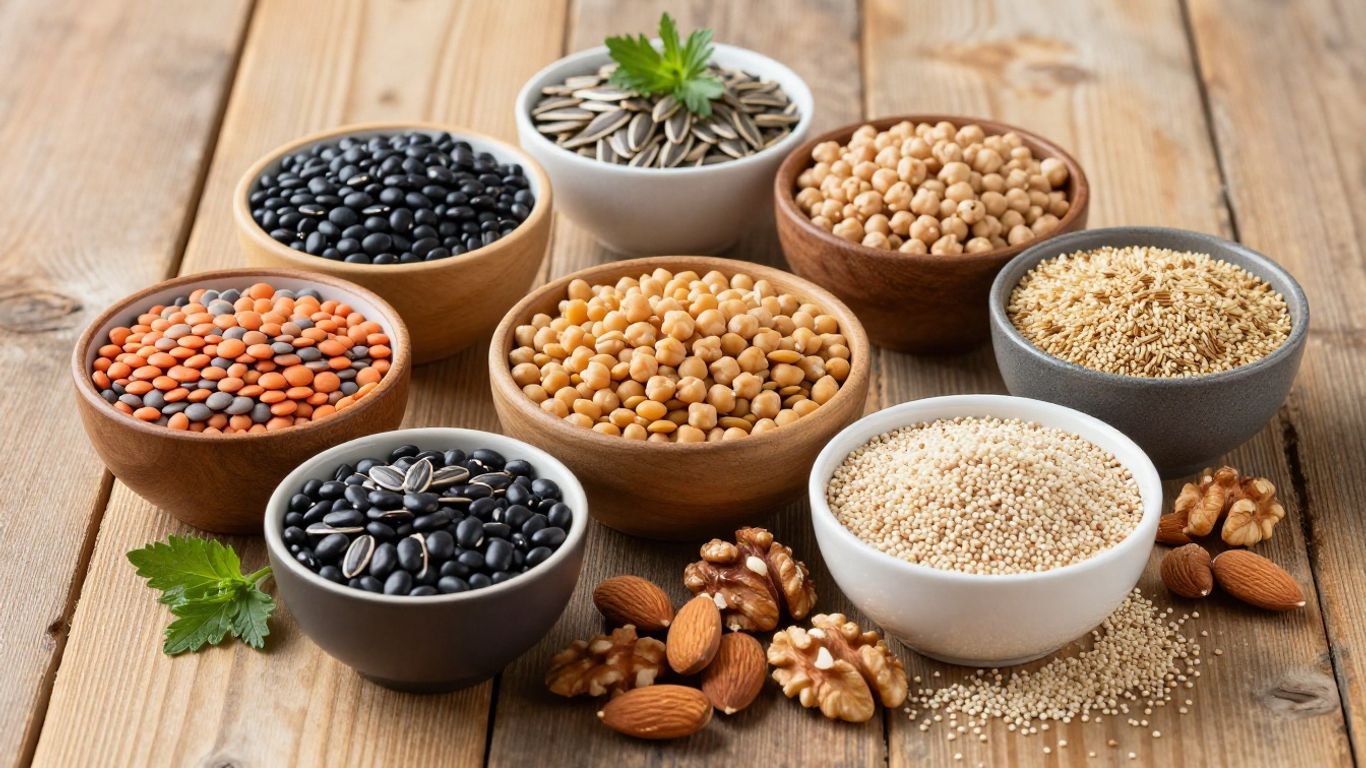
When building a vegetarian diet, one piece of advice comes up over and over again: mix things up. Plant proteins don’t always have every essential amino acid in the amounts our bodies like. That’s why combining different plant foods can give you the full package you need, without relying on soy for every meal.
Achieving Complete Amino Acid Profiles
If you’ve ever heard the term “complete protein,” it refers to foods that have all nine essential amino acids. While animal products deliver all of them, most plant foods fall a little short on one or two. But here’s the bright side—by pairing two or more plant sources that fill each other’s gaps, you end up with a complete profile.
Some basic examples include:
- Grains (like rice or wheat), which are usually low in lysine
- Legumes (like beans or lentils), which often lack enough methionine
- Nuts and seeds, which can round out what the others miss
So, eating a variety of these throughout the day (not just at one meal!) gets you covered.
| Protein Source | Common Limiting Amino Acid | Best Partners To Add |
|---|---|---|
| Beans/Lentils | Methionine | Whole grains, seeds |
| Whole Grains | Lysine | Beans, lentils, peas |
| Nuts & Seeds | Lysine | Legumes, grains |
Mixing different plant-based proteins naturally through snacks and meals leads to balanced nutrition without much fuss. You don’t have to get hung up on eating the perfect combination at every meal—diversity across your day works just fine.
Classic Pairings: Rice and Beans
Who hasn’t heard of rice and beans? There’s a reason this combo is everywhere from Latin America to Asia. Together, they create a meal with all the essential amino acids. Here are a few timeless pairings:
- Rice and black beans, pinto beans, or lentils
- Chickpeas mashed with whole-grain bread
- Corn tortillas with refried beans
These combos aren’t just tradition—they’re practical nutrition!
Snack Combinations: Hummus and Pita
Snacks can be a simple way to work in balanced protein. Try:
- Hummus (made with chickpeas and tahini) with whole-grain pita
- Nut butter on seeded crackers
- Trail mix with a blend of seeds and peanuts
These satisfy cravings and help hit your protein marks without thinking too hard about it.
The bottom line: Rotation and mix-and-match are your best friends for meeting protein goals on a vegetarian diet, no soy required.
Strategic Meal Planning for High-Protein Vegetarian Diets
When it comes to eating enough protein on a vegetarian diet without relying on soy, careful meal planning can make things a lot simpler—and a lot more delicious. By getting creative with pulses, grains, nuts, and seeds, it’s easy to build meals that keep you fueled, satisfied, and on track with your protein goals. A little forward-thinking in the kitchen can make high-protein vegetarian eating effortless.
Energizing Breakfast Ideas
- Chia Seed Pudding: Stir chia seeds into almond milk, add a bit of maple syrup, and top with berries. This simple breakfast offers healthy fats, fiber, and a nice protein boost.
- Savory Oatmeal: Simmer oats with chopped walnuts and hemp seeds, finish with a spoonful of hummus and a sprinkle of pumpkin seeds for a non-traditional, savory start.
- Cottage Cheese Power Bowl: Layer cottage cheese with sliced almonds, flaxseed, and diced fruit. It’s quick and keeps you full much longer.
Starting the day with plant-based protein helps steady energy and encourages better choices the rest of the day.
Satisfying Lunch Options
- Lentil & Quinoa Salad: Mix lentils, cooked quinoa, cherry tomatoes, cucumber, and parsley with lemon-tahini dressing. This salad is hearty and holds up well until lunch.
- Chickpea Wraps: Mash chickpeas with avocado, lime, and a pinch of salt, then tuck the spread into a whole-grain tortilla with crisp greens and shredded carrots.
- Spicy Farro Bowl: Pair cooked farro with seasoned black beans, roasted sweet potato, cabbage slaw, and sunflower seeds.
| Lunch Dish | Protein Per Serving (approx.) |
|---|---|
| Lentil & Quinoa Salad | 14g |
| Chickpea Wrap | 12g |
| Spicy Farro Bowl | 13g |
Nourishing Dinner Creations
- Stir-Fried Tempeh & Greens: Sauté tempeh, broccoli, and bell pepper with garlic and ginger. Serve it with brown rice or whole grains.
- Lentil Bolognese: Use cooked lentils in place of ground meat in tomato sauce. Spoon over whole-grain pasta or spaghetti squash.
- Seitan Tacos: Fill corn tortillas with sautéed seitan, avocado salsa, and shredded lettuce. Seitan absorbs flavors really well and provides plenty of protein.
Quick tips for high-protein vegetarian meal planning:
- Prepare a big batch of cooked beans or lentils for the week.
- Rotate your protein sources to get all the amino acids you need.
- Add seeds or nuts to salads, cereals, and sauces for a bigger protein punch.
Remember, planning ahead—just a little—lets you enjoy a variety of meals packed with protein, flavor, and nutrition every single day.
Convenient High-Protein Vegetarian Snacks
Busy days call for snacks that work just as hard as you do, especially if you’re skipping soy. Luckily, you’ve got a lot of (tasty) options. High-protein vegetarian snacks can fit right into your schedule without any fuss or complicated prep. Whether you’re at your desk, out running errands, or recovering post-workout, nutritious fuel is only a few minutes away.
Savory Chickpea Creations
Chickpeas are all-stars for portable, satisfying snacks. Their nutty flavor pairs well with bold spices or sweet mixes.
- Roasted Chickpeas: Toss canned or cooked chickpeas with olive oil, paprika, and garlic powder. Roast at 400°F for about 20 minutes. Super crunchy, and you can change the seasoning each time.
- Chickpea Salad Mashes: Mash chickpeas with a bit of Greek yogurt (or plant yogurt if you’re vegan), lemon, and herbs. Use it as a dip for veggies or layer onto whole grain crackers.
- Chocolate Hummus: A sweet twist—puree chickpeas with cocoa powder, maple syrup, and a hint of vanilla for a quick protein boost that doubles as a dessert.
When that afternoon slump hits, reach for spiced roasted chickpeas instead of chips—they satisfy cravings and fuel your day with lasting protein.
Nut Butter Delights
Nut butters bring protein and healthy fats together, making them a snack that sticks with you. Here are a few ways to work them into your routine:
- Apple or banana slices with almond or peanut butter and a sprinkle of cinnamon
- Rice cakes smeared with cashew butter and topped with hemp or chia seeds
- Celery sticks filled with peanut butter and pumpkin seeds for extra crunch
Here’s a quick look at protein in some popular nut and seed butters:
| Nut/Seed Butter | Serving Size | Approx. Protein (g) |
|---|---|---|
| Almond Butter | 2 tbsp | 6 |
| Peanut Butter | 2 tbsp | 7 |
| Pumpkin Seed Butter | 2 tbsp | 8 |
Energy Bites and Bars
Homemade snacks are great because you know what goes in them. Energy bites and bars are easy to prep in advance and take anywhere:
- Mix rolled oats, chopped nuts, nut butter, a few dates, and a scoop of plant protein powder. Roll into balls and chill.
- For bars, press the mixture into a lined pan, chill, then slice.
- Experiment with add-ins like shredded coconut, cocoa nibs, dried fruit, or seeds for extra variety.
If you’re rushing out the door, stash a couple of these in your bag. They’re more filling (and usually less sugary) than store-bought options.
Keeping diverse protein-rich snacks handy is one of the easiest ways to support your vegetarian goals—no soy required. Planning ahead never tasted so good.
Maximizing Protein Intake for Active Lifestyles
Understanding Athlete Protein Needs
For those who are physically active, protein needs go up. It’s not just about getting enough to get by; it’s about supporting muscle repair, growth, and overall performance. The general recommendation for sedentary folks is around 0.8 grams per kilogram of body weight, but athletes often need more. Think in the range of 1.4 to 1.8 grams per kilogram, and sometimes even up to 2.2 grams per kilogram if muscle gain is a big goal. This might sound like a lot, but with smart food choices, it’s totally achievable with plant-based options.
The Role of Plant-Based Protein Powders
Sometimes, hitting those higher protein targets can be tricky with whole foods alone, especially around workout times. That’s where plant-based protein powders can be a real help. They’re convenient and can give you a quick protein boost when you need it most. Look for options made from pea, rice, or hemp. They can be mixed into smoothies, shakes, or even oatmeal to easily bump up your protein intake without adding a ton of extra calories or prep time. It’s a practical tool for busy athletes.
Prioritizing Recovery and Muscle Growth
Getting enough protein is one piece of the puzzle; timing and distribution are the others. Your body is really good at using protein for muscle synthesis, but it needs a steady supply of amino acids. Aim to spread your protein intake throughout the day, rather than trying to cram it all into one meal. Having a good protein source with your meals and snacks helps keep your muscles in a state where they can repair and grow. Eating a protein-rich meal or snack within a couple of hours after exercise is also a smart move, as your muscles are particularly receptive to nutrients then. This consistent approach supports better recovery and helps you get the most out of your training.
Here’s a quick look at how protein needs can stack up:
| Activity Level | Protein Range (g/kg body weight) |
|---|---|
| Sedentary | 0.8 – 1.0 |
| Moderately Active | 1.2 – 1.4 |
| Athlete (Endurance) | 1.4 – 1.7 |
| Athlete (Strength/Power) | 1.6 – 2.2 |
Remember, these are general guidelines. Your individual needs might vary based on training intensity, duration, and your body’s specific response.
Affordable and Accessible Protein Choices
Sticking to a budget doesn’t mean you have to skimp on protein. Luckily, many of the most protein-rich plant-based foods are also some of the most wallet-friendly. As food prices continue to climb, focusing on these accessible options can make a big difference in meeting your nutritional needs without breaking the bank. It’s all about smart shopping and knowing where to look.
Budget-Friendly Beans and Lentils
Beans and lentils are true champions when it comes to affordable nutrition. They’re not only inexpensive but also incredibly versatile, fitting into countless meals. Whether you buy them dried to save even more or opt for canned for convenience, they offer a substantial protein punch. A half-cup of cooked chickpeas, for instance, can cost as little as 28 cents and provides about 7 grams of protein, plus fiber and other good stuff. Lentils are another fantastic option, often costing around 45 cents per cup and delivering a whopping 18 grams of protein. They’re a staple for a reason!
Cost-Effective Seeds for Daily Use
Don’t underestimate the power of seeds! While they might seem small, they pack a serious protein and nutrient density. Hemp seeds, for example, offer about 10 grams of protein in just three tablespoons, and they’re loaded with healthy fats. They might be a bit pricier per serving than beans, but a little goes a long way, and they add a great texture and nutritional boost to smoothies, salads, and yogurt bowls. Think of them as a small investment for a big return in protein and omega-3s.
Smart Shopping for Plant Proteins
Making the most of your grocery budget for protein is all about strategy. Buying in bulk when possible, especially for dried beans, lentils, and grains, can lead to significant savings over time. Comparing prices per unit (like per ounce or per pound) is also a good habit to get into. Don’t forget to check out store brands, which are often just as good as name brands but cost less. Planning your meals around these affordable protein sources will help you stay on track nutritionally and financially. It’s about making informed choices that support both your health and your wallet.
Building a high-protein vegetarian diet doesn’t require expensive specialty products. The most effective and budget-friendly protein sources are often the simplest, most common foods found in any grocery store. Focusing on legumes, whole grains, and certain seeds can provide all the necessary amino acids and nutrients without a hefty price tag.
Integrating Protein Throughout Your Day
Balancing plant proteins across all your meals is one of the smartest moves for anyone following a vegetarian or plant-forward diet. Spacing your protein intake throughout the day helps your body absorb and use it for muscle repair, energy, and even mood support. It’s not only about hitting your daily goal—timing and distribution matter too.
Steady Protein Consumption for Muscle Synthesis
Your body can only use so much protein at once, so spreading it out makes way more sense than loading up at dinner. Research suggests aiming for around 20–30g of protein per meal helps support muscle growth and maintenance. Most of us get lots at dinner but miss out earlier in the day. It’s a simple switch, but it pays off:
- Add hemp or chia seeds to your breakfast oats or smoothie
- Include hummus with lunch, or a big helping of lentil soup
- Snack on mixed nuts or a protein-rich bar in the afternoon
The Importance of Amino Acid Distribution
Not all plant proteins are “complete” on their own, but variety solves this. When you mix different protein sources—like combining beans with whole grains—you cover all the essential amino acids. This synergy means your body gets what it needs for growth and repair. Here’s a quick look at how some typical vegetarian foods stack up:
| Food | Serving Size | Protein (g) |
|---|---|---|
| Lentils | 1 cup cooked | 18 |
| Quinoa | 1 cup cooked | 8 |
| Pumpkin seeds | 1 oz | 7 |
| Chickpeas | 1 cup cooked | 15 |
| Chia seeds | 2 tbsp | 4 |
Balancing Protein with Other Nutrients
Protein won’t work its magic alone. Carbohydrates and healthy fats help your body use protein for rebuilding muscles and fueling your day. Try:
- Whole grain bread with peanut butter
- Quinoa salad tossed with olive oil and seeds
- Stir-fry with tofu, veggies, and brown rice
Building balanced meals and snacks with protein at the center will help you feel satisfied, keep energy up, and support any goals—from muscle building to steady energy at work.
By planning your meals with protein in mind—right from breakfast to your evening snack—you make sure your body always has what it needs. Once it becomes a habit, steady protein intake is actually pretty easy to keep up, even on busy days.
Making sure you get enough protein all day long is super important for feeling full and energized. It helps your body work its best. Want to learn easy ways to add more protein to your meals and snacks? Visit our website for simple tips and tasty ideas!
Conclusion
Getting enough protein on a vegetarian diet doesn’t have to mean eating soy at every meal. There are so many other options—lentils, chickpeas, black beans, quinoa, nuts, seeds, and even some grains. Mixing and matching these foods throughout the day can help you get all the amino acids your body needs, even if you skip the tofu or tempeh sometimes. It’s not about perfection, but about variety and balance. Try swapping in a new bean or grain, or sprinkle some hemp or chia seeds on your breakfast. You might be surprised how easy it is to hit your protein goals without feeling stuck in a soy rut. With a little planning and some curiosity in the kitchen, you can build meals that are satisfying, nourishing, and full of plant-powered protein—no overload required.
Frequently Asked Questions
What are some high-protein vegetarian foods that don’t contain soy?
Great non-soy protein options for vegetarians include lentils, chickpeas, black beans, kidney beans, quinoa, farro, millet, amaranth, nuts like almonds and peanuts, and seeds such as chia, hemp, and pumpkin seeds.
How can I make sure I get all the essential amino acids without eating soy?
You can get all the essential amino acids by eating a variety of plant foods. For example, pairing grains like rice with beans or having hummus with whole-grain pita can help you get complete protein.
Is it possible to build muscle on a vegetarian diet without soy?
Yes! Foods like lentils, beans, quinoa, nuts, seeds, and plant-based protein powders can help you meet your protein needs for muscle growth. Just make sure to eat enough calories and spread your protein out during the day.
What are some easy high-protein vegetarian snacks?
Try roasted chickpeas, nut butters on whole-grain toast, energy bites made from oats and seeds, or a handful of almonds or pumpkin seeds. These snacks are tasty and rich in protein.
Are plant-based proteins as good as animal proteins for athletes?
Plant proteins can be great for athletes, but you might need to eat a bit more to get the same effect as animal proteins. Mixing different plant foods and using protein powders can help you reach your goals.
What are affordable vegetarian protein sources?
Beans, lentils, and seeds are some of the most budget-friendly protein sources. Buying in bulk and choosing dried or canned beans can help save money.
Do I need to eat certain foods together at the same meal to get complete protein?
No, you don’t have to eat all your protein sources together at one meal. As long as you eat a variety of plant foods throughout the day, your body will get all the amino acids it needs.
How can I add more protein to my meals without using soy?
Add lentils or beans to soups and salads, sprinkle seeds on yogurt or oatmeal, use quinoa as a base for bowls, and include nuts or nut butters in your snacks. These simple changes boost protein without relying on soy.